

Hitting and Tactical Games on 1/2 court (Cross-court or Down-the-line) for 4 to 6, or 6+ players
PreviewContents
Description:
The coach organizes the space according to the activity he wants to do and the number and level of his players.
Goal of the activity
Working in tight spaces forces the player to have more control of his game while giving more intensity to the training, since the waiting time is considerably reduced.
Planning of the session:
Defined by the coach
Organization and development:
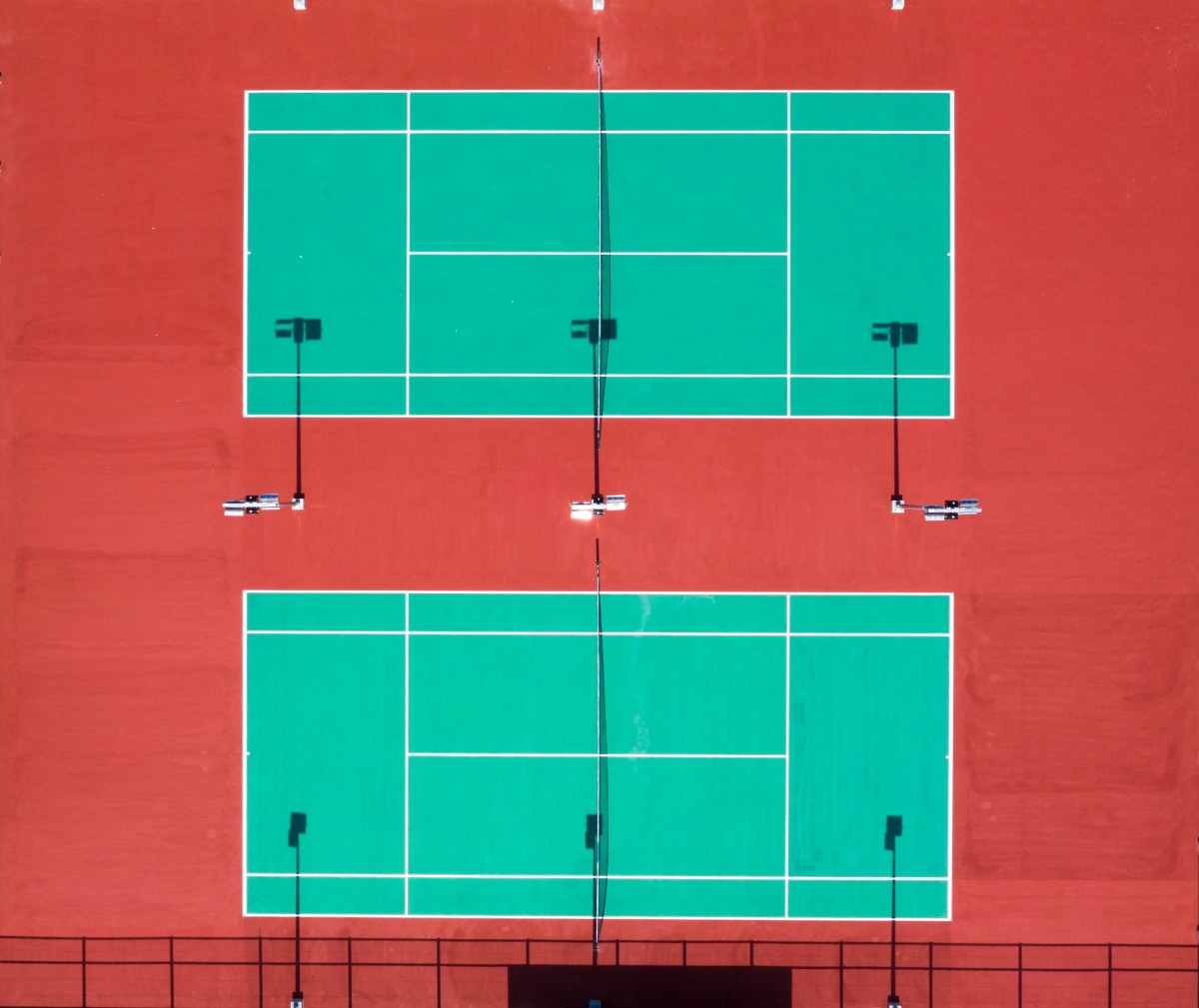
It is about establishing rallies or tactical games in small spaces, at the same time that the court is organized according to the number of players.
Changes in Positions: the distribution depends on the number of players, but an important factor to consider is the time a player has to wait in between points.
Coach’s task:
The coach is totally in charge of the session, both the players who are on his 1/2 parallel court, and in control of the other players. The coach gives the players some autonomy in making decisions (rhythm, intensity, and self evaluation) and reduces the involvement to giving feedback to the players after the completion of the exercises.
Player role:
The players take responsibility of performing at the highest possible intensity.
Practical examples
Hitting Drills and Games/Points
“Hitting Drills or Controls on 1/2 court” The coach establishes the hitting exercises or games/points (whether cross-court or down-the-line) and players train or compete. There are
4 players training/competing and 2 players waiting, with a ball in hand and ready to play whenever one player makes a mistake or loses the point.
Different Rotations of the players that Wait to play:
1- The players wait at the back fence (on both sides) and get in to play whenever one player (from the same side) makes a mistake or loses the point.
2. The players wait at the net post (on both net posts) and get in to play whenever one player (closest to their net post) makes a mistake or loses the point. This type of rotation works best for players 12 and younger.
3- Each 1/2 is a separate court. 1 player can compete against 2 players (rotating after every mistake or point lost) on one of the halves.
4- A Fitness station can be added, and all players (or groups of players) will do Fitness rotating every 10′.
Points or games:
“Games and Points on an Enlarged 1/2 court” The court is divided in 2 halves, enlarging each half in a shape of a triangle (as shown in the video). The exercises using this set up will predominantly be Down-the-line Games and Points.
Different Rotations of the players that Wait to play:
1- The players wait at the back fence (on both sides) and get in to play whenever one player (from the same side) makes a mistake or loses the point.
2. The players wait at the net post (on both net posts) and get in to play whenever one player (closest to their net post) makes a mistake or loses the point. This type of rotation works best for players 12 and younger.
3- Each 1/2 is a separate court. 1 player can compete against 2 players (rotating after every mistake or point lost) on one of the halves.
4- A Fitness station can be added, and all players (or groups of players) will do Fitness rotating every 10′.
No Comments